


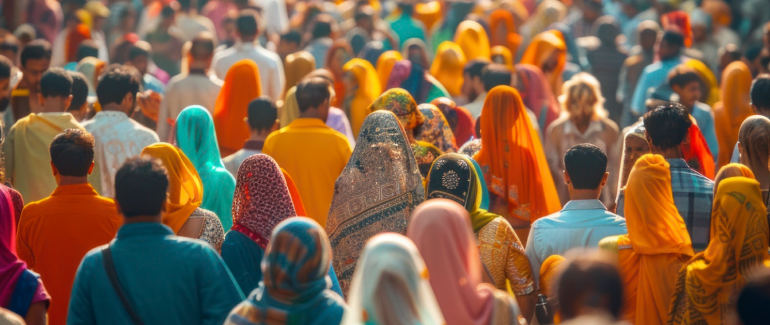
The Banjara people, often referred to as India’s nomadic or gypsy community, have a fascinating history that spans centuries, deeply rooted in the cultural and economic fabric of the Indian subcontinent. Known for their vibrant clothing, intricate beadwork, and timeless traditions, the Banjaras have contributed to India’s trade, arts, and culture while maintaining their distinct identity. This article delves into the history of the Banjara people, exploring their origins, nomadic lifestyle, cultural heritage, and the challenges they continue to face.
Origins of the Banjara People
The Banjara community is believed to have originated from Rajasthan, though their presence can be traced across the length and breadth of India. Their journey to various regions of the subcontinent is closely linked to their traditional role as carriers and traders. The word “Banjara” is derived from the Sanskrit word “Vanjara,” meaning merchant or trader. This reflects the community’s deep association with the transportation of goods across vast distances, often using bullocks and other animals.
Early Beginnings
The Banjara people are thought to have come from the Rajputana region (now Rajasthan), migrating southward centuries ago. Their early movements are believed to be linked to their role as transporters for royal armies during wars. In addition to trading, they were involved in agriculture, animal husbandry, and handicrafts. Over time, they spread across different states of India, from Maharashtra to Karnataka, Andhra Pradesh, Madhya Pradesh, and even into Gujarat and Tamil Nadu.
Their nomadic nature allowed them to be adaptable to various environments and communities, often forming their own unique subgroups based on region, language, and customs.
The Nomadic Lifestyle of the Banjaras
The nomadic lifestyle is central to the identity of the Banjara people. For centuries, the Banjaras traveled in caravans, transporting goods across the country. They are well-known for their trading routes, particularly in the Central Indian region. They transported goods such as grain, salt, firewood, and textiles between villages and cities, playing an important role in India’s economic system by connecting remote villages to the larger economy.
This itinerant lifestyle influenced much of their cultural practices, including their clothing and architecture. The Banjaras’ colorful clothing is symbolic of their vibrant culture, with intricate embroideries, beadwork, and jewelry that are often passed down through generations. Their circular tents (called “dholis”) were portable homes that could easily be assembled and dismantled as they moved from place to place.
Banjara Culture and Traditions
Despite their nomadic nature, the Banjara community developed rich cultural traditions that have been passed down through generations. Their language, art, music, dance, and crafts are integral parts of their identity.
Language
The Banjara people speak a dialect known as “Gormati” or “Lambadi”, which is a mix of Hindi, Marathi, and Rajasthani. Although many Banjaras are now fluent in the languages of the regions they inhabit, Gormati remains a key part of their cultural identity, symbolizing their shared ancestry and history.
Art and Crafts
One of the most notable aspects of Banjara culture is their artistic expression. The Banjaras are renowned for their embroidery, beadwork, and textile crafts. These crafts are not only used for personal adornment but also serve as cultural symbols, representing community identity and social status. Banjara women, in particular, are skilled in creating intricate patterns and designs, often using brightly colored threads and beads to create visually stunning pieces.
The Banjara jewelry is also famous for its unique designs, including beaded necklaces, nose rings, bangles, and headpieces that are rich in symbolism and tradition. These pieces are often passed down through generations, each piece representing a family’s heritage and status.
Music and Dance
The music and dance of the Banjaras form an essential part of their social life. The Banjaras are known for their folk music, which often accompanies festivals, weddings, and other community events. The dhol, a large drum, plays a central role in Banjara music, accompanied by flutes, string instruments, and other percussion instruments.
Banjara dance is equally vibrant and often performed in groups at festivals and gatherings. The dances are characterized by rhythmic movements, often representing the joy, struggle, and resilience of their nomadic life. These dances not only serve as a form of entertainment but also as a way to connect with their cultural roots.
The Banjaras and Their Contribution to India’s Society
While the Banjaras were often seen as a marginalized group, their contributions to Indian society cannot be overstated. Their role in trade and commerce helped connect various regions of the subcontinent, ensuring the flow of goods and culture. The Banjara trade routes were integral to India’s ancient economy, linking rural areas to urban centers, and promoting commerce across the country.
In addition to their economic contributions, the Banjara community has played a pivotal role in cultural exchange. As nomads, they interacted with diverse communities, spreading their arts, music, cuisine, and traditions. The Banjaras were particularly influential in the spread of Indian folk music and dance, and their vibrant clothing and textiles have influenced regional fashion.
Despite their significant contributions, the Banjaras faced numerous challenges throughout history, including social marginalization, discrimination, and restrictions on their mobility. However, their resilience and determination to preserve their culture have ensured their survival and relevance in modern India.
Banjara Virasat Museum: A Tribute to the Banjara People
In recent years, efforts have been made to preserve the history and celebrate the culture of the Banjaras. The Banjara Virasat Museum in Poharadevi, Maharashtra, is a significant milestone in these efforts. The museum aims to showcase the rich heritage of the Banjara community, focusing on their art, craftsmanship, music, dance, and history.
Through the museum’s interactive exhibits, visitors can explore the traditional Banjara lifestyle, from their nomadic journeys to their intricate textiles and jewelry. The museum not only serves as a cultural archive but also as a platform for empowerment, fostering pride and recognition within the Banjara community.
The Banjara Virasat Museum is more than just a museum — it is a cultural renaissance for the Banjaras, ensuring that their stories, traditions, and contributions are never forgotten.
Conclusion
The Banjara people have endured centuries of migration, trade, and cultural exchange, leaving behind a legacy that is as rich as it is diverse. From their early beginnings as nomadic traders to their modern-day contributions to India’s cultural fabric, the Banjaras have played an essential role in shaping the nation’s history.
While their journey has often been one of struggle and marginalization, the Banjara Virasat Museum offers a platform to celebrate and preserve their heritage, allowing their stories to be heard and respected. By protecting and sharing the cultural practices of the Banjaras, we ensure that this vibrant community’s legacy will continue to inspire future generations.